







Online Exclusives
View AllExplore the ethical challenges of AI in internal auditing, from algorithmic bias to professional judgment and human oversight.
Cybersecurity may not appear as a standalone audit but is often integrated across broader audit engagements.
Learn how internal audit can help healthcare organizations strengthen data governance, manage legacy data risks, and improve assurance.
Discover five practical strategies for helping internal auditors build AI skills and adopt AI responsibly.
Overconfidence, automation, and lax regulation can lead to complacency, even in a volatile financial services environment.
New COSO guidance helps organizations strengthen board governance, enterprise risk management, and strategic decision-making.
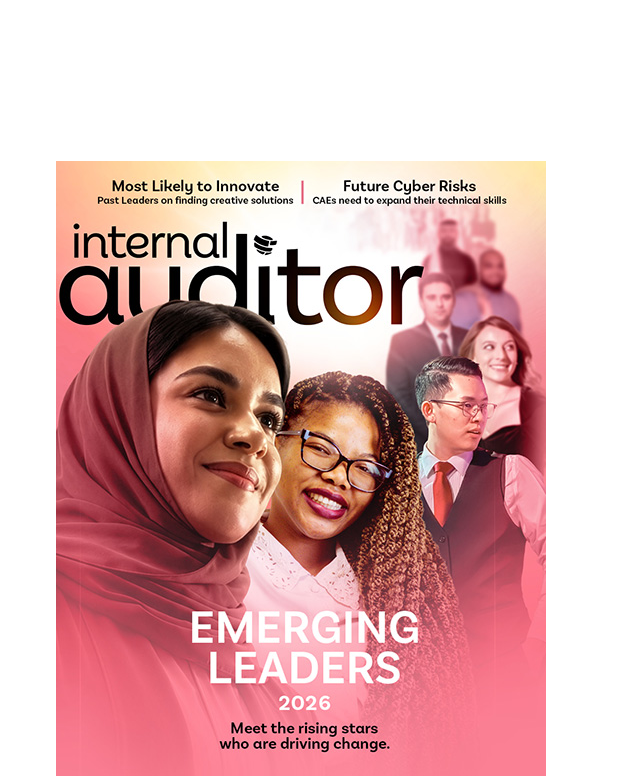
Digital Magazine
View AllExplore a checklist of workplace activities to help internal auditors strengthen their knowledge, skills, and professional development.
Social awareness helps internal auditors uncover risk.
Tim McCollum reflects on the achievements of the 2026 Emerging Leaders and what their contributions reveal about the future of internal auditing.
Meet 15 emerging internal audit leaders advancing the profession through innovation, collaboration, and leadership.
Seven past Emerging Leaders share how they're advancing internal audit through technology, leadership, and new approaches to professional growth.

IAm Justin Zavis
The IIA-Los Angeles Chapter president is committed to creating opportunities for internal auditors.
Read More
Blogs
View AllThe IIA is strengthening support for internal audit professionals across Canada.
Explore why data quality and master data governance are essential to AI-driven decision-making, risk management, and internal audit in manufacturing.
Risk is becoming less evenly distributed, requiring internal auditors to look beyond traditional measures.
Explore how control drift creates risk between internal audit cycles.
Review 10 key takeaways from Risk in Focus 2026/2027 on emerging risks and governance.
Read a fictional story exploring what happens when internal auditors are sidelined by AI.
Get our latest issue
Emerging Leaders 2026
Meet the rising start who are driving change.
